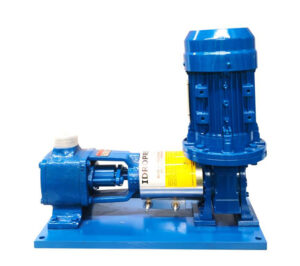

Positive Displacement Pumps: A Complete Guide for Selection
Positive displacement pumps represent a fundamental category in industrial and civil pumping systems. These devices stand out for their ability to transfer fluids through an operating principle based on the cyclic variation of an internal volume, ensuring constant and reliable performance even under complex operating conditions.
What Are Positive Displacement Pumps?
A positive displacement pump is a device that transfers a fluid by trapping a defined volume and moving it from a suction chamber to a discharge chamber. Unlike centrifugal pumps, the flow rate of a positive displacement pump is proportional to the rotation speed and only minimally affected by discharge pressure.
This operating principle gives positive displacement pumps unique characteristics that make them indispensable in numerous industrial applications. The delivered flow rate mainly depends on the rotational speed or reciprocating movement of the pumping elements and remains substantially independent of discharge pressure.
Operating Principle of Positive Displacement Pumps
The operation of positive displacement pumps is based on a continuous suction and compression cycle. During the suction phase, the volume of the internal chamber increases, creating a vacuum that draws in the fluid. In the next phase, this volume progressively decreases, pushing the liquid toward the outlet.
Thanks to this mechanism, positive displacement pumps are able to:
- Ensure high volumetric efficiency
- Generate high pressures even with highly viscous fluids
- Maintain a constant flow rate regardless of back pressure
- Handle sensitive or particularly viscous fluids
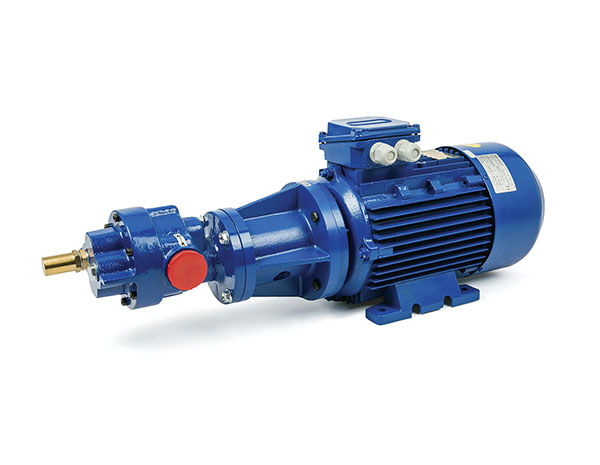

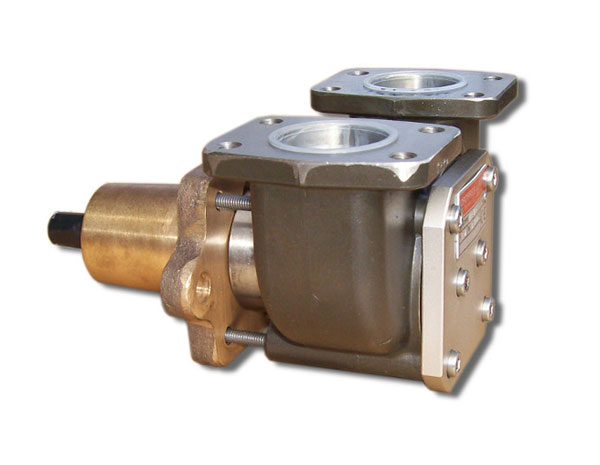
Types of Positive Displacement Pumps
Positive displacement pumps are mainly divided into two families: reciprocating and rotary.
Reciprocating Positive Displacement Pumps
Reciprocating positive displacement pumps use an alternating linear motion to generate the volume variation necessary for pumping. These include:
- Piston pumps: provide high pressures and precision. (visit the page)
Among the most widely used positive displacement pumps, they can generate extremely high pressures. The piston moves inside a cylinder, creating suction and discharge through check valves. Ideal for high-pressure applications such as industrial hydraulic systems and washing plants. - Diaphragm pumps: ideal for corrosive fluids.
In these positive displacement pumps, a flexible diaphragm separates the pumped fluid from the drive mechanism. This feature makes them perfect for corrosive or contaminated liquids, as there is no contact between the fluid and moving mechanical parts. - Plunger pumps: used in dosing systems.
A variation of piston pumps, these positive displacement pumps excel in applications requiring extreme pressures, such as injection systems and high-pressure hydraulic circuits.
Rotary Positive Displacement Pumps
Rotary positive displacement pumps use continuous rotary motion to move the fluid. The main types include:
- Peristaltic pumps: perfect for sensitive fluids and fluids with suspended solids. (visit the page)
They use a flexible tube compressed by rotating rollers. The fluid is pushed forward without ever coming into contact with mechanical parts, making these positive displacement pumps ideal for sanitary, chemical, and dosing applications. - Gear pumps: compact and reliable, used for oils and viscous liquids. (visit the page)
They use two gears rotating in opposite directions or one inside the other, trapping the fluid between the teeth and the housing. These positive displacement pumps are appreciated for their simple construction, reliability, and ability to handle viscous fluids such as paints, oils, and lubricants. - Progressive cavity pumps (single-screw pumps): quiet, suitable for constant flow rates even at high viscosity. (visit the page)
Composed of a helical screw rotating inside a stator chamber, these pumps provide a uniform and quiet flow, making them ideal for highly abrasive and poorly lubricating fluids. - Lobe pumps: used in the food and pharmaceutical industries. (visit the page)
Similar to gear pumps but with more rounded profiles, lobe positive displacement pumps are particularly suitable for food and pharmaceutical products thanks to their ability to preserve product integrity.
Technical Characteristics of Positive Displacement Pumps
- Constant Flow Rate
Positive displacement pumps maintain a stable flow rate regardless of pressure variations in the system, ensuring precision in dosing and transfer processes. - Self-Priming Capability
Many positive displacement pumps can suction fluids even when air is present in the circuit, simplifying startup and maintenance operations. - Handling of Viscous Fluids
Positive displacement pumps excel at pumping high-viscosity liquids, where centrifugal pumps show significant limitations. - High Operating Pressures
Thanks to their operating principle, positive displacement pumps can generate very high pressures, essential in many industrial applications. - Energy Efficiency
When correctly sized, positive displacement pumps offer excellent efficiency, reducing energy consumption and operating costs. - Dosing Precision
The direct relationship between rotational speed and flow rate makes positive displacement pumps ideal for applications requiring precise dosing of chemicals or additives.
Advantages of Positive Displacement Pumps
- Efficiency independent of pressure
- Suitable for complex and difficult fluids
- Accurate dosing
- Reliability and robustness in demanding applications
- Simplified maintenance
Differences Between Positive Displacement and Centrifugal Pumps
Centrifugal pumps are preferable for large flow rates of low-viscosity fluids, such as water. Positive displacement pumps, on the other hand, are essential when precision, consistency, and the handling of viscous fluids or fluids containing solid particles are required. For example, when dosing chemical or food products, the choice always falls on a positive displacement pump.
Applications of Positive Displacement Pumps
Chemical and Petrochemical Industry
In the chemical sector, positive displacement pumps are essential for transferring corrosive, viscous, or sensitive products. Their ability to handle aggressive fluids with precise flow rates makes them indispensable in production, dosing, and mixing processes (e.g., isocyanates, soap, paints, resins, plasticizers, glue, solvents, paraffin, glycerin).
Food and Beverage Industry
Sanitary positive displacement pumps, designed according to strict hygiene regulations, are widely used in the food industry for pumping creams, syrups, sauces, oils, and dairy products. Their ability to preserve product integrity is crucial in this sector.
Pharmaceutical Industry
The precision and reliability of positive displacement pumps are critical in pharmaceutical manufacturing, where accurate dosing of active ingredients and contamination prevention are essential requirements.
Oil & Gas Industry
High-pressure positive displacement pumps are used in the extraction, refining, and transportation of oil and derivatives. Their robustness and ability to operate with viscous fluids make them ideal for these demanding applications.
Water Treatment
In wastewater treatment and purification processes, positive displacement pumps are used for chemical reagent dosing and the transfer of high-density sludge.
Paper Industry
Paper production requires pumping high-density pulp and additives. Robust and reliable positive displacement pumps are essential in these continuous processes.
Selection Criteria for Positive Displacement Pumps
Choosing the most suitable positive displacement pumps requires careful evaluation of several operating parameters:
Fluid Characteristics
Viscosity, temperature, chemical aggressiveness, and the presence of suspended solids significantly influence the selection of pump type and construction materials.
Required Flow Rate
Positive displacement pumps must be sized according to the required flow rate, considering that this is directly proportional to rotational speed.
Operating Pressure
Maximum discharge pressure is a critical parameter in selecting positive displacement pumps, influencing the choice between reciprocating and rotary types.
Suction Conditions
Suction lift and available NPSH are determining factors in ensuring proper operation.
Construction Materials
Chemical compatibility between the pumped fluid and pump materials is essential to guarantee durability and reliability.
Regulatory Requirements
Industries such as food and pharmaceuticals impose specific standards that positive displacement pumps must meet in terms of materials, surface finishes, and certifications.
Maintenance of Positive Displacement Pumps
Proper maintenance is essential to preserve the efficiency and longevity of positive displacement pumps. Maintenance activities include:
Periodic Inspections
Regular checks of seals, bearings, and pumping elements help identify premature wear and prevent failures.
Lubrication
Some positive displacement pumps require regular lubrication of bearings and transmission components to ensure smooth operation.
Component Replacement
Wear components such as diaphragms, seals, and valves must be replaced according to the manufacturer’s instructions.
Cleaning
Periodic cleaning is essential, especially for positive displacement pumps used in food and pharmaceutical applications.
Performance Monitoring
Continuous monitoring of parameters such as pressure, flow rate, and electrical absorption helps identify anomalies before they develop into failures.
CHow to Choose a Positive Displacement Pump
The choice of a positive displacement pump should be based on several key parameters:
- Type of fluid: viscosity, abrasiveness, presence of solids
- Required flow rate: volume to be transferred per minute/hour
- Operating pressure: difference between suction and discharge pressure
- Materials: chemical compatibility (stainless steel, cast iron, bronze)
- Ease of maintenance: essential in sensitive sectors such as food and pharmaceuticals
Selecting the most appropriate positive displacement pumps requires an in-depth analysis of operating conditions and fluid characteristics. Relying on specialized and qualified suppliers guarantees access to optimized technical solutions and expert support for installation and maintenance.
External Resources
For a technical deep dive into positive displacement pumps, the guide by Michael Smith Engineers is a highly authoritative resource in the fluid handling industry.
Positive displacement pumps are an essential technology for applications requiring precision, reliability, and the ability to handle complex fluids. Thanks to their versatility, they are used in various industrial sectors, from food and pharmaceuticals to chemicals and oil & gas.